
Concerns Raised Over Reported Diplomatic Privileges for Taliban Affiliated Women Amid Continued Restrictions on Afghan Women
Diplomatic Privileges Concern
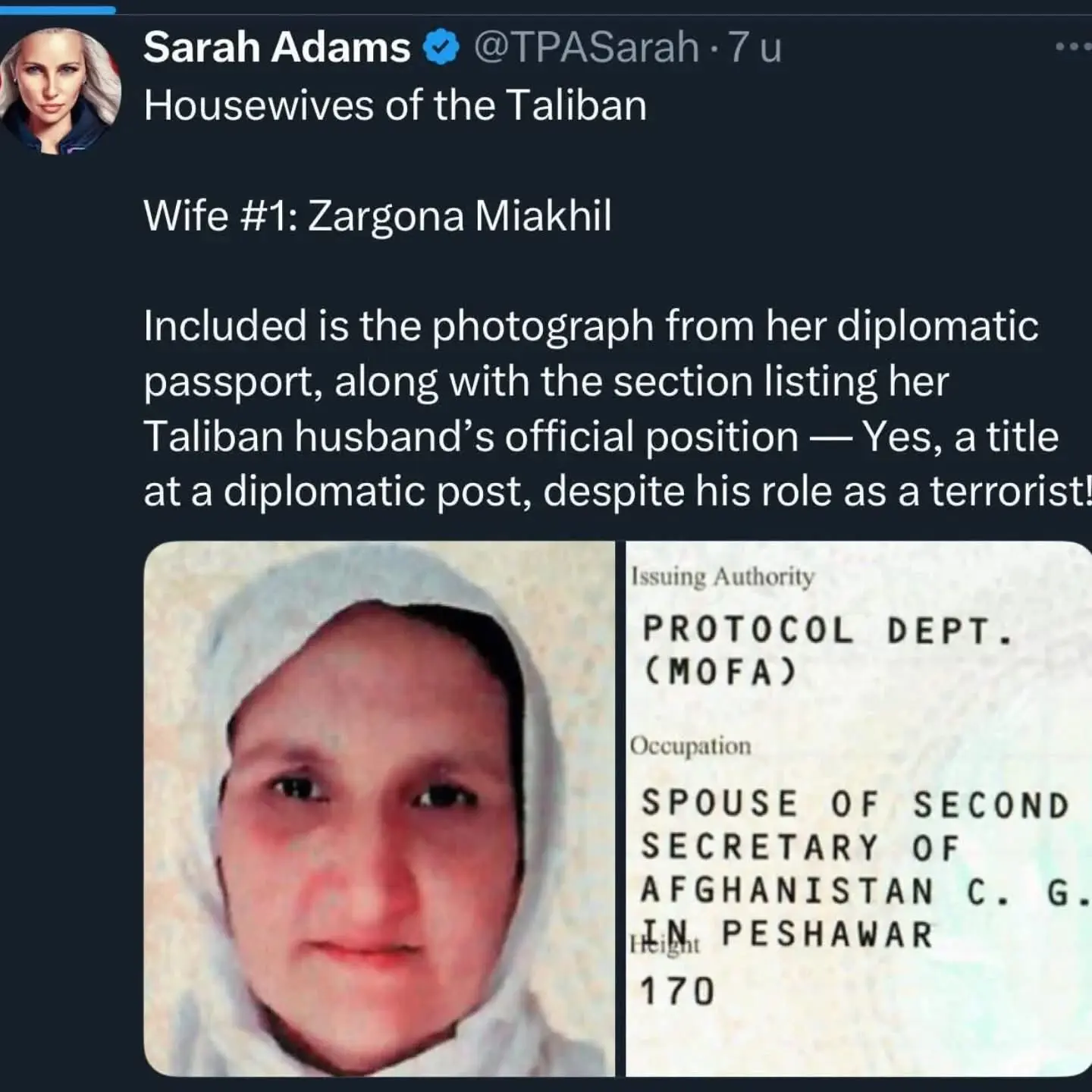
Concerns Raised Over Reported Diplomatic Privileges for Taliban Affiliated Women Amid Continued Restrictions on Afghan Women
Recent reports by Sarah Adams, a former officer of the U.S. Central Intelligence Agency (CIA), have generated significant public attention following the publication of a series of images alleging that a number of women affiliated with the Taliban have been issued diplomatic passports. According to the reports, these documents have been granted to individuals closely associated with the Taliban's leadership, prompting renewed public discussion regarding unequal treatment, transparency, and the group's internal policies. These reports emerge at a time when the Taliban have reportedly implemented regulations prohibiting the inclusion of women's photographs on Afghanistan's national identity cards. The apparent contrast between restricting the identity rights of ordinary Afghan women while extending diplomatic privileges to women connected to the ruling authorities has raised concerns among observers and human rights advocates about inconsistencies in the implementation of these policies. Many commentators view this apparent disparity as reflective of a broader pattern in which the rights and freedoms of Afghan women continue to be significantly restricted, while exceptions may be afforded to individuals with close ties to those in positions of authority. They argue that such practices undermine principles of equality, transparency, and non-discrimination. The issue has further intensified calls from civil society organizations and human rights advocates for greater international attention to the condition of Afghan women and for consistent adherence to fundamental human rights standards, including equality before the law and equal recognition of personal identity without discrimination.
Back to archive